
A dive into the good, the bad and the ugly of proposed micromobility legislation in PA
Authors: Julio Rodriguez, Ngani Ndimbie, Sam Pearson
Electric bicycles (e-bikes) and e-scooters provide important ways for people to get around Pennsylvania affordably, safely, and efficiently. Across the commonwealth, people with able bodies, disabilities, and limited mobility alike rely on e-bikes and other micromobility devices to reach work, school, medical appointments, businesses, and other destinations. For some individuals, these vehicles can provide an important transportation option when walking long distances, biking on a traditional bicycle, or accessing a motor vehicle is difficult or impossible.
As Pennsylvania considers new legislation regulating micromobility, it is crucial that policymakers carefully consider how these proposals could affect the people who rely on these vehicles every day. In our next post we are going to highlight good micromobility that touch on E-Scooters, Parking Protected Bike Lanes, and bicyclist safety laws like the Idaho stop.
The Main Challenge: E-Motos
Before reviewing the proposed pieces of legislation, it is important to distinguish between e-bikes and e-motos.
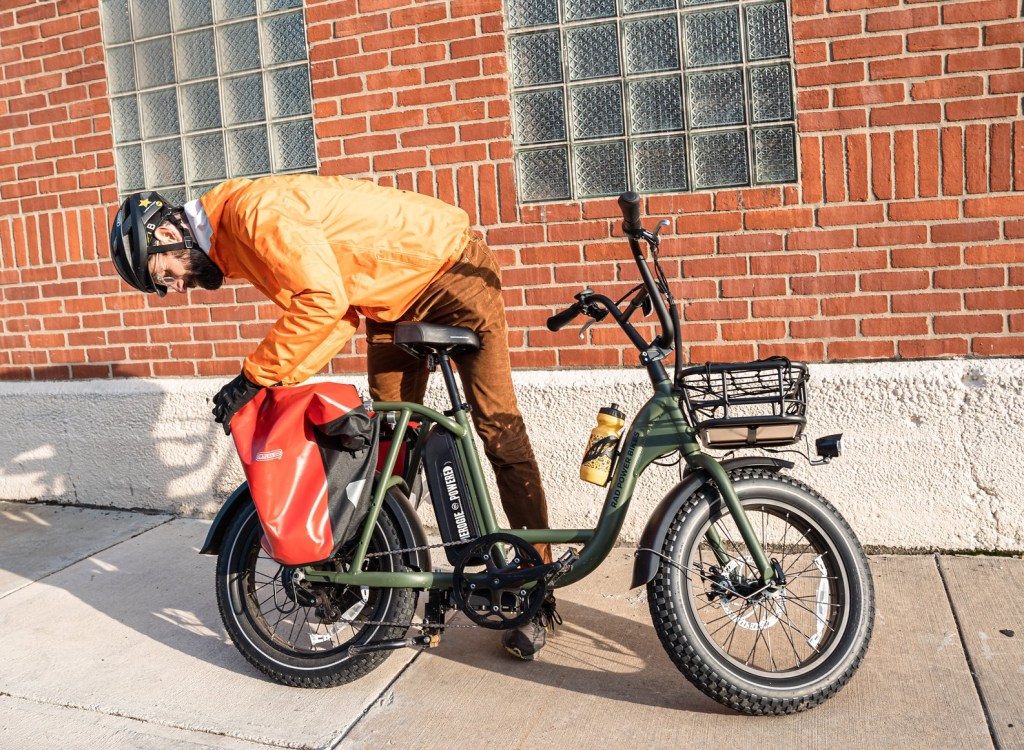
E-bikes: In PA, legal e-bikes are lightweight (under 100 lbs), low-speed (below 20mph) pedal-assisted and potentially partially throttle-boosted transportation that have a max 750 watt motor and operable pedals. They cannot legally be ridden by people under 16.
E-motos: E-moto is the colloquial term for devices that exceed the weight, speed, and/or motor power of the electric bicycle. According to Pennsylvania law, these devices are motorized pedalcycles or motor-driven cycles, depending on their top speeds. In PA, their riders are legally required to have a license, registration, and insurance.
Here’s the challenge: Often, e-motos look quite a bit like e-bikes, sometimes they are marketed as e-bikes, but they’re significantly more dangerous and disruptive. PeopleForBikes has a helpful explainer, or check out Pennsylvania’s Micromobility Information Sheet.
The distinction matters because legislation, concern, and complaints should accurately identify the types of vehicles involved. If e-bikes, e-motos, and even e-scooters are grouped together in data and response, policymakers may draw conclusions that do not accurately reflect the safety profile or use of each vehicle.
Examining Pennsylvania’s Proposed Micromobility Legislation
There’s been a lot of activity on the topic of micromobility this session. Below are the most troubling.
Co-Sponsorship Memo: E-Bikes and E-Scooters Regulations on High-Speed State Roads and Highways (Circulator – Rep. McAndrew, Allegheny County)
The basics:This co-sponsorship memo seeks to limit the speed of e-bikes and e-scooters to 20 miles per hour (mph) and legalize use of e-scooters for people age 16 and above. The proposal would also require e-bike and e-scooter users to only use roads designated by signage or roads where bike lanes are provided for their use.
The good: The memo acknowledges that e-bikes and e-scooters are viable modes of transportation and proposes to legalize e-scooters in Pennsylvania and create a framework for their operation. The memo’s tone also suggests an earnest effort to improve safety on our roadways.
The bad (buckle up): As far as e-bikes go, this bill is potentially redundant as bicycles and e-bikes are already prohibited from riding on Pennsylvania’s freeways. But if it actually means highways, it would likely obliterate access and connectivity for people who ride e-bikes.
Many local roads in Pennsylvania have speed limits ranging from approximately 25 to 35 mph. State roads often have speed limits of 45 or 55mph. If micromobility users are prohibited from using certain roads, many would have limited alternatives for reaching their destinations. In some areas of the Commonwealth, users could effectively be left stranded.
There is also a potential safety concern. Roads with lower speed limits may have narrower lanes or roadway configurations that result in greater interaction between motor vehicles and micromobility users. Pennsylvania’s traffic rules require motorists to provide a four-foot passing distance when overtaking a bicycle. On narrower roads, creating additional restrictions on where micromobility users can travel may make it more difficult for motorists to safely provide that distance.
Plus, Pennsylvania currently has relatively few protected bike lanes available to people using micromobility devices. One significant factor is the lack of legislative changes that would permit the development of parking-protected bike lanes on state roads. In other words, a proposal intended to improve safety could inadvertently force people onto roads or routes where they have fewer safe infrastructure options.
Furthermore, PA Bike Routes and US Bike Routes are often on highways, and suddenly e-bikes would be banned.
Contradiction: Acoustic/pedal bicyclists and pedestrians have been walking and riding on highways since long before the e-bike and this co-sponsorship memo doesn’t propose to change that. So it appears that, to travel on PA highways, a person would just have to switch from their e-bike to their normal bike or go for a walk.
Key takeaway: While well-meaning, this bill would only drastically decrease safety for e-bike riders and arbitrarily give them less access to the roadways than pedestrians people on normal bicycles.The goal should be to create infrastructure and rules that allow a range of modes of transportation to safely coexist—not to make micromobility less accessible.
HR 351: Improving E-Bike Safety and Infrastructure (Sponsor – Rep. Webster, Montgomery County)
The basics: The Pennsylvania House is proposing a resolution to study e-bikes and develop a regulatory framework. The study would be conducted by the Joint State Government Commission. The resolution also includes a component that could allow municipalities to impose additional regulations on e-bikes.
The good: Additional research can be valuable. The proposed study is very thoughtful and correctly identifies that a current challenge in responding to micromobility use is that we don’t have the right data to make informed decisions.
The bad: Commission members conducting the study may not necessarily have specialized expertise in micromobility, bicycle infrastructure, accessibility, transportation planning, or the rapidly evolving e-bike market. And, if municipalities are given broad authority to establish their own rules, Pennsylvania could end up with a patchwork of regulations that vary from one municipality to another. That could make it extremely difficult for riders to understand where they can legally travel and harm our burgeoning outdoor recreation tourism industry.
Key takeaway: We should consider whether a lengthy study conducted by generalists is the best way to address the immediate transportation and safety challenges facing micromobility users.
SR 322: Addressing the E-Bike Safety Gap on Pennsylvania Roads (Sponsor – Sen. Malone, Lancaster County)
The basics: SR 322 is the Senate version of the resolution discussed above.
The good: Again, the study proposal seems well-meaning and aimed at having better information to develop an improved legal framework.
The bad: The Senate sponsor cites a national statistic regarding crashes involving e-bikes, stating that since 2017, e-bikes were involved in crashes resulting in more than 360,000 emergency room visits and 230 deaths.
That statistic deserves closer examination.
The underlying data may not clearly distinguish between e-bikes and e-motos. Crash data from state DOTs (including PennDOT) does not necessarily provide the level of differentiation needed to understand the specific types of vehicles involved. If the data does not accurately distinguish between e-bikes, e-motos, and e-scooters, it becomes difficult to draw reliable conclusions about the safety of a specific type of vehicle.
Also this memo proposes examining e-bike registration, which is unnecessary. Registration is already required for e-motos (though seemingly rarely obtained) and is not needed for the lightweight, low-speed vehicles that meet the legal definition of an e-bike.
HB 2703: Proposed E-Bike Legislation: Local Control, Three-Class Definition, and No Statewide Registration or Licensing Mandates (Sponsor – Rep. Cooper, Westmoreland County)
The basics: HB 2703 proposes a three-class system for e-bikes and would not require statewide registration or licensing. However, the legislation would allow municipalities to ban e-bikes.
The good: Three cheers for the three class system! This bill would bring PA in line with the majority of states by transitioning to the three class system.
The bad: We’ve said it before and we’ll say it again: Giving municipalities the authority to prohibit e-bikes could create significant mobility challenges for riders.
Imagine someone riding along a long-distance bike route and discovering that one municipality along the route prohibits e-bikes. That rider could be forced to stop riding and walk their bicycle through that jurisdiction.This creates unnecessary uncertainty for riders and could undermine the connectivity that makes bicycle and micromobility networks useful in the first place.
Transportation systems do not stop at municipal boundaries. Neither should we assume that people using them will understand a different set of rules every time they cross into a new municipality.
Key takeaway: A statewide framework should provide consistency and predictability, while still allowing municipalities to address legitimate local safety concerns.
HB 2040: E-Scooter Regulations (Sponsor – Rep. Schlegel, Lebanon County)
The basics: HB 2040 would impose a $100 fine on individuals who are deemed to be riding their scooters “carelessly” and would allow additional fines for riding on sidewalks or highways.
The bad: One significant concern with this proposal is the subjectivity of the term “carelessly.“
What constitutes careless riding? Without a clear and objective definition, enforcement could vary significantly between officers and communities. Vague standards can also create opportunities for micromobility users to be unfairly targeted.
The legislation also raises a larger issue: If Pennsylvania is going to regulate e-scooters, the Commonwealth should first establish a clear legal framework for their use rather than creating penalties around a mode of transportation whose legal status remains unclear.
Key takeaway: Rather than relying on subjective language, legislation should establish clear rules of the road that riders, motorists, law enforcement officers, and pedestrians can understand.
We Need Smarter Micromobility Policy
The conversation around e-bikes and e-scooters should not be framed as a choice between safety and micromobility.
We can have both.
People who use e-bikes and e-scooters deserve safe infrastructure, clear rules, and consistent enforcement. Motorists and pedestrians deserve the same. People with disabilities and limited mobility deserve transportation options that allow them to move independently.
Instead of creating additional barriers to micromobility, Pennsylvania should focus on policies that:
- Expand micromobility infrastructure.
- Allow parking-protected bike lanes on appropriate state roads.
- Establish clear and consistent statewide definitions for e-bikes, e-motos, and e-scooters.
- Improve crash data collection so policymakers can distinguish between different types of vehicles.
- Consider the needs of people with disabilities and limited mobility.
- Avoid creating a confusing patchwork of municipal regulations.
- Use objective and clearly defined standards for enforcement.
- Apply traffic safety rules consistently across different modes of transportation.
- Consider that children and adults both use e-scooters. While it may be reasonable to limit use for a 17 year old, adults need to be able to travel seamlessly between municipalities.
- Incentivize purchases of legal e-bikes and disincentivize the purchase of high-powered e-motos.
Micromobility is not going away. The question is whether Pennsylvania will create a transportation system that accommodates these emerging modes safely and equitably or whether the state will create unnecessary barriers that make it harder for people to choose alternatives to driving. After all, conventional motor vehicles are the most dangerous devices on the roads.
The answer should be clear: We need better infrastructure, better data, and smarter legislation – and an understanding that those are key to improving safety—not policies that restrict people’s ability to get where they need to go.
CAMP welcomes conversations with legislators who want to propose solutions related to e-bikes, e-motos, or e-scooters. If interested please reach out to our legislation chairs: ngani@mobilify.org and/or julio@bicyclecoalition.org.


Leave a Reply