
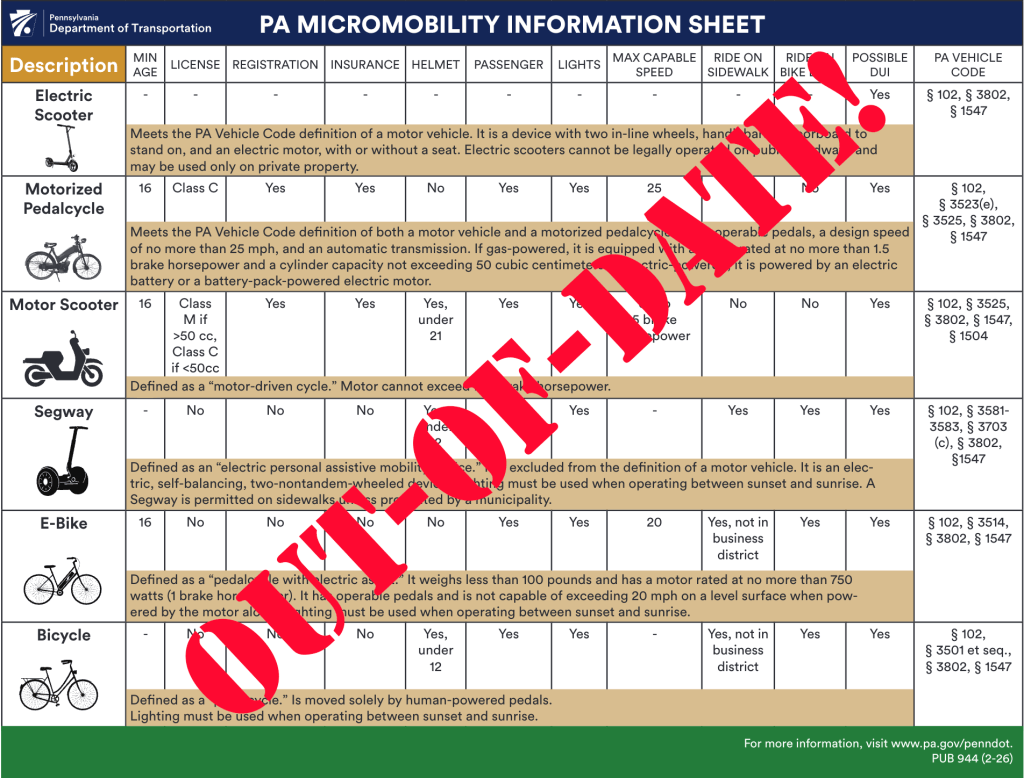
The state of the policy landscape surrounding micro-mobility in Pennsylvania is unsettled.
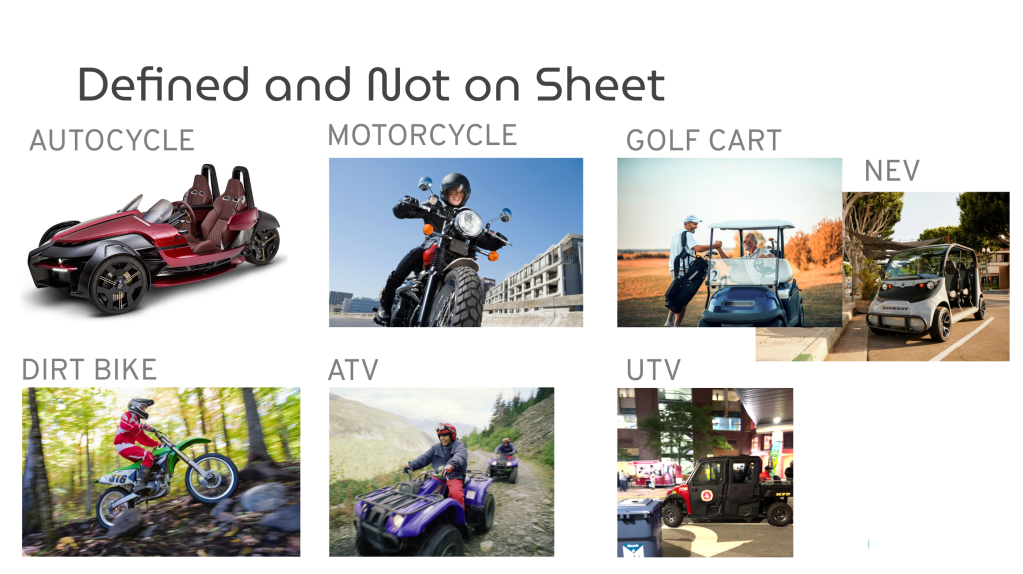
There are existing laws that cover bicycles, e-bikes, motorized pedalcycles (think mopeds), motor scooters (like Vespas), and electric personal assistive mobility devices (this means Segways and, strangely/unexpectedly hoverboards which meet a similar spec as an electric “self-balancing, two-nontandempwheeled device” for one). There are also laws covering motorcycles, autocycles (slingshots), and Neighborhood Electric Vehicles, all of which are legal to use on roads. And laws covering off-highway vehicles, ATV/UTVs, dirt bikes, and golf carts, which are only legal to use off-road.
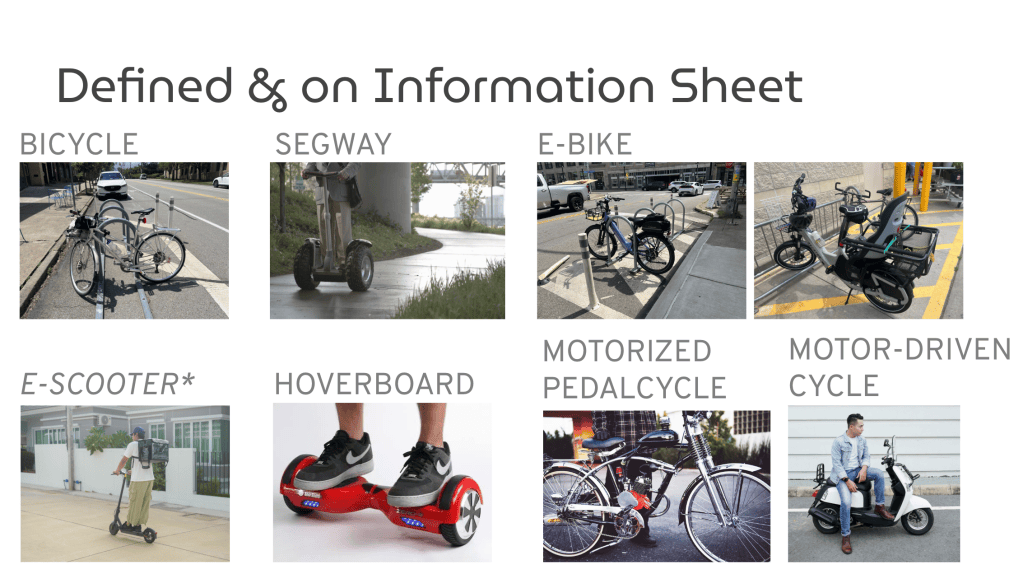
There are provisions in existing laws that acknowledge a variety of non-powered toy vehicles like big wheels, kids’ tricycles, skateboards, kick scooters, etc.
And the need for a variety of assistive devices, from manual to powered wheelchairs to little scootabouts (not a technical term!), is also addressed.
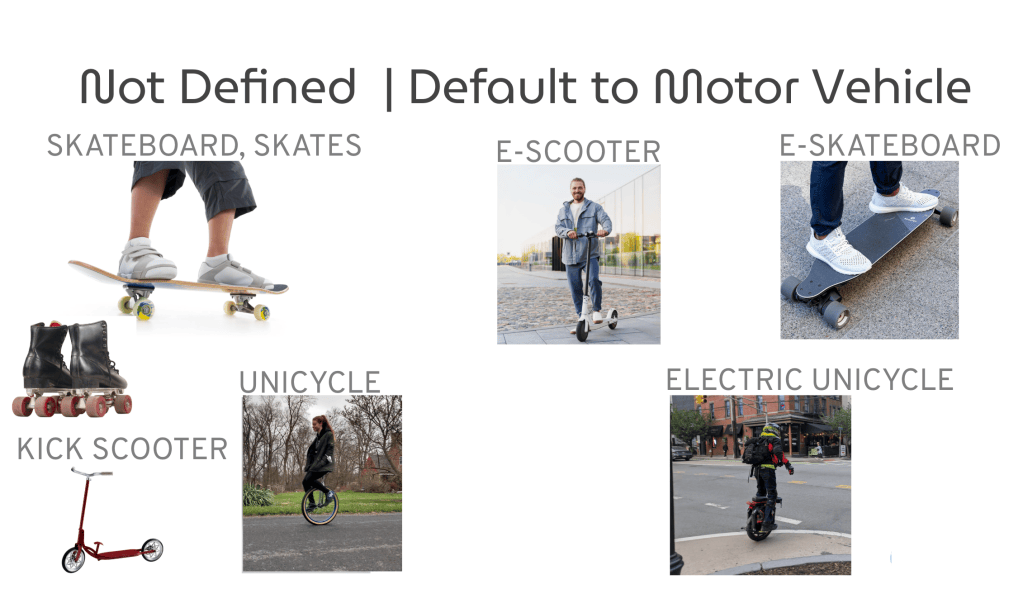
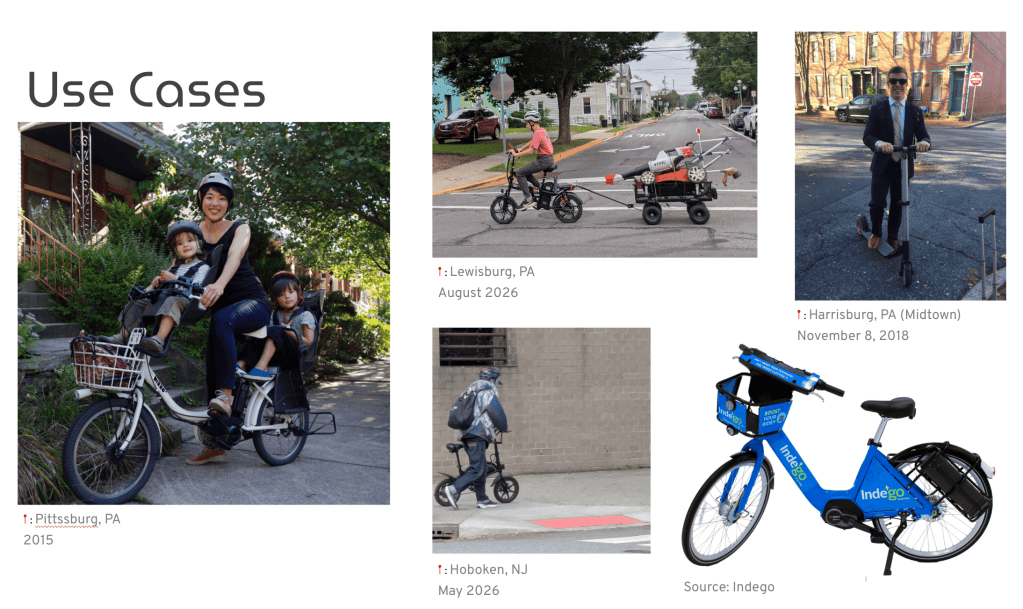
But we live in an era of high-power, rechargeable batteries and innovation in micromobility has left the existing categories behind. This means there are vehicle available for sale, in private hands, and swarming the streets and trails which are not defined and therefore, according to PennDOT literature (PUB 944, 8-26), “may not be legally operated on highways as defined in the PA Vehicle Code, including sidewalks, bike lanes, and roads.” Some of them are so common that people are surprised to hear they are not even address in Title 75, i.e. the electric scooter or e-scooter. Others are more varied, like electric skateboards or different types of electric unicycles (One Wheels and Single Wheels).
As costs rise and particularly gas prices, more and more people are seeking out lower cost transportation alternatives. An older gentleman said to us recently that he sees the e-bikes (and the illicit e-motos/e-motorcycles masquerading as e-bikes) as the current version of teh $500 beater car. In fact, it’s a pretty direcct analogy.
Plus, they can be a lot of fun.
It is hard to keep track and there is very little provision for public education. On the first count, even people who are involved in these issues on a daily basis can get tripped up by updates to documents being issued or newly proposed legislation. On the second point, there really is almost no way for people to know that e-scooters are currently illegal (outside of private property, where the owners permission would be required) or that no one under 16 can legally ride an e-bike in PA or that a lot of the devices being sold as “e-bikes” are either to fast, too powerful, or too heavy (and are therefore actually motorized pedalcycles requiring license, registration, and insurance).
At the Statewide Active Transportation Summit in early June, CAMP core team members gave a presentation and led a discussion about micromobility, doing a close reading of the PA Micromobility Information Sheet, and sharing links to that document. Within a week, the sheet had been updated and then again two months later. When such updates occur it is anyone’s guess as to how the world is to intuit that the state of policy interpretation has shifted.
But we can report that things are subject to change without notice!
Amidst all of this, we should also acknowledge that the laws themselves may change. To be honest, e-scooters were, briefly and in a limited area legal in PA. There was an exception passed back in 2019 that permitted shared e-scooters as a pilot only in Pittsburgh and just for a few years. The pilot was not renewed. In the interim of course, e-scooters, both shared and privately owned, have proliferated across the Commonwealth, showing up in small towns and rural areas and all but overrunning large cities. As mentioned earlier, these vehicles are illegal for anyone to ride and there are no regulations beyond total prohibition to address the minimum age for riders or whether any riders should wear helmets. That is a very wobbly context in which to pursue enforcement or education.
And, sadly, in this interregnum, there have been injuries and deaths, including of youngsters, riding such devices. As a result, totally understandably, there is pressure to develop laws that will address their use.
So, even as we try to share with people the current state of play, be aware that draft laws are being proposed and debated, the laws in other states examined, and fundamental principles argued. And anything we write today could be superceeded tomorrow.
CAMP is working to provide input on such proposals, both as part of congressional transportation committee review and draft circulation and during public hearings.
Back in mid-June, CAMP prevailed upon Karl Graybill to provide testimony in a hearing on e-scooters and micro-mobility. Karl, who recently retired member from the Lancaster Office of Public Works, had been involved for decades in much of the planning, construction, operations and maintenance of the city’s growing active transportation network. He presented CAMP testimony and addressed topics related to bikeshare, scootershare, and infrastructure during the hearing. The written testimony is available here and the recording of the hearing is available here.
At the beginning of September, the Senate Democratic Policy Committee held a hearing on micro-mobility in Allentown and invited a number of organizations to testify. The Coalition for Active Mobility in PA joined the Lehigh Valley Planning Commission, PennDOT, local law enforcement, the head of the State Association of Police Chiefs, a representative from the AAA Safety Foundation, and the Lehigh Valley Coalition for Appropriate Transportation in addressing the two senators and reviewing both the promise and the peril in general of increasing transportation access for people outside of motor vehicles and micro-mobility more specifically. A recording of the hearing is available for review here. The CAMP presentation slides are not linked on that page, only visible in the recording, but they can be found here.
Ultimately we see these devices as important parts of the transportation ecosystem, and a potentially excellent alternative to the far more dangerous, destructive, and expensive motor vehicles that are currently the default. In general CAMP input has included acknowledging existing conditions, making initial proposals for solutions in broad categories (education, enforcement, safety, and laws), and continuing to focus on some basic principles about access and mobility options:
- Micromobility devices are expanding mobility for Pennsylvanians who need it.
- There is a need to improve safety outcomes and further define how micromobility devices should be integrated in the transportation system.
- We need to make it easier to do (buy) the right thing. Currently it’s easy to buy a high-powered, dangerous or otherwise faulty device.
- Protect kids. And give them good options.
- Invest in Pennsylvania. Support the economy and ensure the needed education can happen.


Leave a Reply