
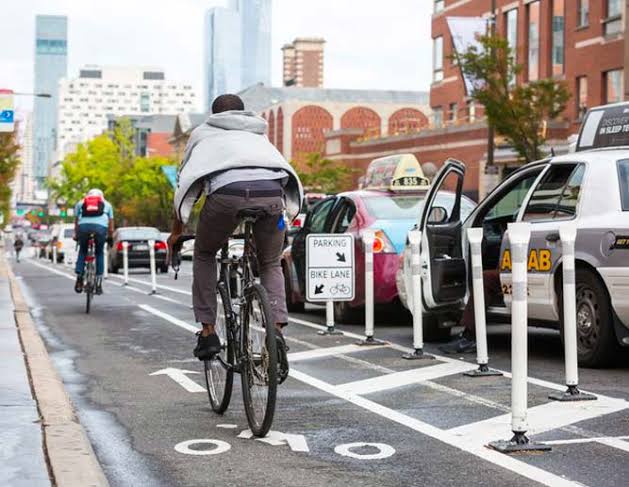
Will Parking Protected Bike lanes, ebikes and speed cameras finally see the light of day?
The recent Pennsylvania election results have positively altered the landscape for active transportation advocates across the state. In addition to the opening up of new opportunities, many long standing priorities may now finally make their way through the Pennsylvania legislature to become law.
For instance, bills that would allow for Parking Protected Bike Lanes on state roads or those that receive state funds, have long had bipartisan support in the House, passing three times near unanimously, yet have consistently withered after arriving in the Senate.
We expect that single party control of the Senate, House and Governor’s mansion will have an accelerating effect on some of CAMP’s priorities, especially around legislation and funding. Many members within the upcoming leadership have already stated that public transit and general transportation funding are at the top of their list – a priority we share.
Here at CAMP, we’ve narrowed down our long list of focus areas to five priorities that we feel can and should be addressed in 2027 once the new General Assembly is seated in January. Not only will these items make significant safety improvements, they will also give the new leadership quick and meaningful wins to demonstrate their commitment to delivering results for Pennsylvanians.
1. Substantially increase state funding for active transportation
This is as simple as it sounds. But we have to state the need if we want it to be recognized. According to the national Safe Routes Partnership, “the latest data show that the average per capita investment of state (not federal) dollars in walking, biking, and Safe Routes to School is $5.80, which would mean Pennsylvania should allocate $75.7 million to be on par with the national average.” Considering that we currently allocate about $2M per year, Pennsylvania would need to expand this number by a factor of 40 just to reach the national average.
Further, according to the recently released League of American Bicyclists State Report Card, Pennsylvania needs to spend at least 2% of federal transportation funds on biking and walking improvements in order to increase our grade and national ranking. According to the League, “in the last five years of publicly available data, Pennsylvania has only hit this threshold once.”
2. Immediately legalize parking-protected bike lanes and pedestrian plazas
This long overdue fix would address a technicality in the vehicle code that is blocking traffic engineers from installing safer and more cost-effective bike lanes that preserve parking. Giving municipalities the option of installing Parking-Protected Bike Lanes, just like every other state, can be an easy win for legislators concerned with road safety. As stated before, it has long had bipartisan support in the House, yet has largely stalled in the Senate.
3. Update laws related to e-bikes, e-scooters, and related devices to current best practices
There is already pressure within the legislature to address the widespread availability of high-powered e-motos and to create a legislative framework for the use of e-scooters. We aim to help move forward proposals that clarify the definitions and rules around these micromobility devices and provide the funding and structure for education and enforcement. The current situation is chaos! Pennsylvania’s e-bike laws are woefully out of date, and we look forward to working with the legislature to bring the law to modern standards, while preserving the easy access to responsible e-bike use.
4. Legalize and expand automated enforcement across the state, such as for speeding and red lights
Some advances of the reauthorization of red light and speed camera pilots have already happened since we added it to our list in the first half of 2026. CAMP would like to see it further expanded to allow their use in smaller jurisdictions, or create additional automated enforcement categories, such as vehicle noise (a major health issue as well as a self-evident quality-of-life and safety issue) or bike lane and bus lane monitoring and enforcement.
5. Strengthen legal protections for Vulnerable Road Users
Protecting Vulnerable Road Users (VRUs) may not need as much debate or fireworks to move it into law, but we would be happy to welcome it with fanfare once in place. Overall road fatalities have gone down, yet the fatality rates for VRUs, i.e. people who walk, bike, and use accessibility devices, have gone up. One simple step would be to strengthen the legal protections for VRUs, creating an incentive to drive more carefully when these road users are present.
Looking further ahead, the impact of the one-party “trifecta” should allow us to push for bigger and more impactful goals.
CAMP’s goals will continue to expand and change over time, and there are many other issues such as legalizing the Idaho Stop and weighing in on Autonomous Vehicle regulation that we see on the horizon.
Stay tuned for more information as CAMP develops a strategic approach to creating the policy, funding, and cultural conditions that will allow Pennsylvanians to thrive without needing to drive.


Leave a Reply